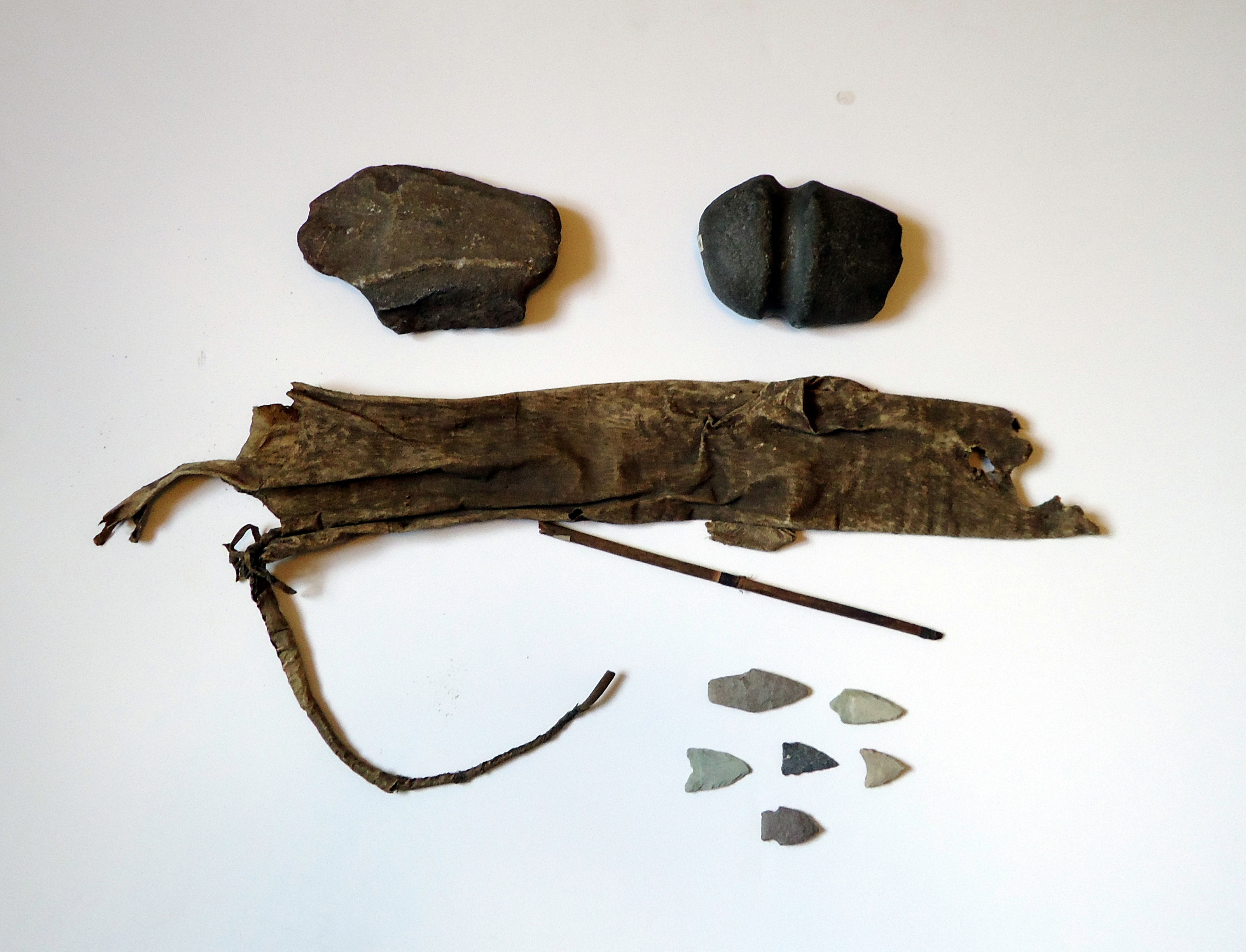
Pakachoag (also spelled Packachoag or Packachoog) was a historic Nipmuc village located on Pakachoag Hill, in what is now Auburn and southern Worcester, Massachusetts, near the present-day College of the Holy Cross. The name is commonly interpreted as “at the turning place” or “where the river bends,” referring to the nearby Blackstone River. With fertile land, freshwater springs, and abundant natural resources, Pakachoag was an important place for the Nipmuc people, who lived, farmed, hunted, and gathered food in the area.
In 1674, Pakachoag was home to approximately 20 families, or about 100 people, led by Sagamore John (Hoorawannonit). That year, English missionary John Eliot visited the village, which became known as a Praying Indian village. As English settlement expanded, the Nipmuc faced increasing conflict and loss of their ancestral lands. During King Philip’s War (1675–1676), the people of Pakachoag were displaced, and the village was eventually abandoned. After the war, Sagamore John and some of his followers reportedly returned to Pakachoag. Today, Nipmuc descendants continue to live throughout Central Massachusetts.
Visit the Museum any Tuesday or Saturday to learn more about the Native Americans in Auburn, and see more artifacts that were found on Pakachoag Hill, as well as a collection of stone artifacts found on Prospect Hill.
Wiser/Printer Family of the South Parish of Worcester by Helen Poirier
James Wiser, also known as Artimus James Wiser, was a Native American who lived in the South Parish of Worcester and answered the alarm to Lexington and Concord on April 19, 1775. He was a private in Captain Timothy Bigelow’s Company of minutemen and militia in the Colonel Artemas Ward regiment. He was also listed in Captain Jonas Hubbard’s Company, of Colonel Jonathan Ward’s regiment as a private. According to the muster roll dated August 1, 1775, James enlisted April 27, 1775, and served for 3 months and 15 days. After the Battle of Lexington, the militia under the direction of Colonel Ward, held the British in Boston until additional British forces arrived in May and June.
James was the son of Benjamin and Sarah [Printer] Wiser. He was born November 1, 1752, in Grafton. He was named after his grandfather, James [1685-1713] who was credited with building the house at what is now 13 Bancroft Street in 1797 as noted in the Historic Houses of Auburn book. The only position recorded in town records that James held was fence viewer 1781. His job was to make sure fences in the town were properly maintained to cut down on neighbors arguing and other difficulties with uncontained animals getting into gardens.
James’s great grandfather was James Quanohpohkit Rumney Marsh Wiser. According to the Native Northeast Portal, he was a member of a leading Natick family tribe at Medfield. He and his brother, Thomas, were scouts for the English during King Philip’s War, In 1675. He and his brother were used as guides for troops from Mass Bay Colony. James helped the English to recruit the Praying Indians interned on Deer Island to spy on the Narragansett and Wampanoag to gain information on attacks to Lancaster. After the war, James returned to Natick.
James Rumney Marsh Wiser’s father was John Awassamog, aka Sagamore John. He married Yawata [Abigail] and were living in Medford when Awassamog converted to Christianity and followed Reverend John Eliot who was overseer of the “Praying Towns” where Natives lived together. James was well educated and a family leader.
Artimus James Wiser’s mother was Sarah Printer who was born in 1717 in Grafton, and was the daughter of Ammi Printer, of Natick, Massachusetts. In 1747, while living in Southborough, she married Benjamin Wiser. The couple lived on Wiser’s farm in Worcester and raised five children, James, Benjamin, Hannah, Sarah, and Abigail. Sarah died in Auburn in the winter of 1794 at age 77.
Her grandfather was James [Wawaus] Printer and was a Nipmuc leader from Hassanamesit, [Grafton]. He is known for his work at the first printing press in the colonies. He helped produce the first Indian Bible in the Algonquin language. He also set the type for books like Narrative of the Captivity and Restoration of Mrs. Mary Rowlandson. He also served as an interpreter for Rev. Eliot especially in translating the Bible. He worked on Indian Primers, book of Psalms, and typeset Puritan missionary works to be used to Christianize Native Americans. James Printer worked as a typesetter for 16 years before the King Philip’s War. Sara’s grandmother’s name was never recorded.
Sara’s great grandfather was Naoas who was a convert of Rev. Eliot and one of the leaders of the Christian Native church in Hassanamesit.
Artimus James never married and died April 24,1811 and is buried in the Auburn Center Burial Ground with many of his family members.

